
The Scholar Archetype: Seeks Evidence and Converts with Confidence, Not Pressure
They know what they want—they just need proof. Case studies, technical comparisons, and demos tailored to their scenario. Rushing them destroys the sale.
Updated on October 19, 2026
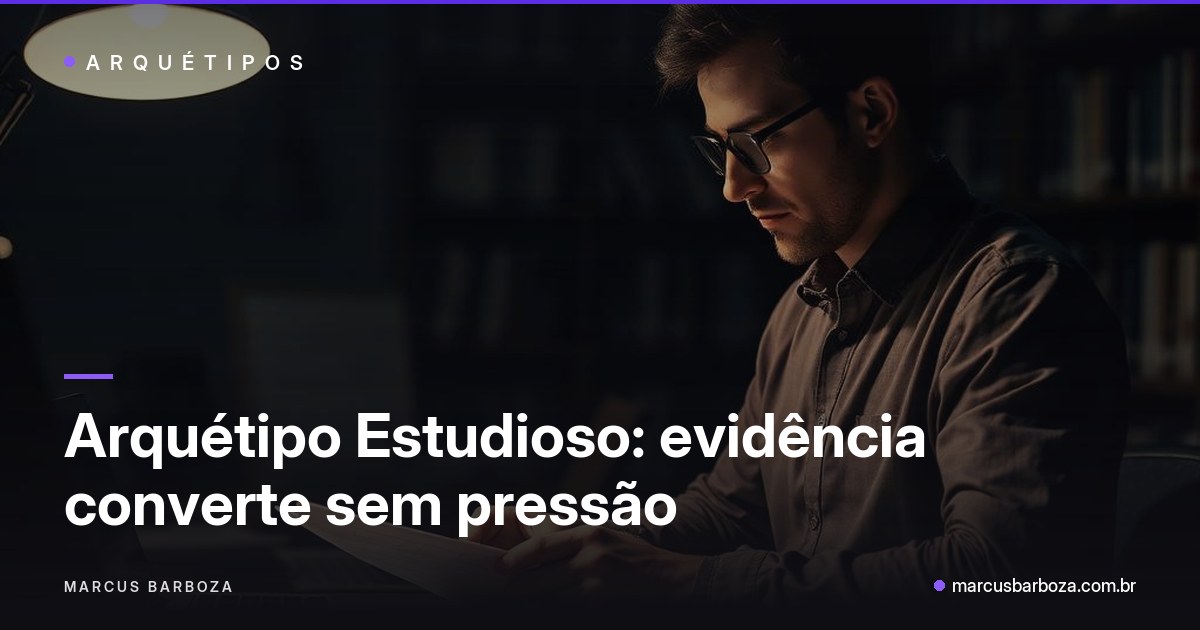
The Scholar has high but conditional intent: they know what they want and need proof to decide. They convert with confidence, not pressure—real case studies, technical comparisons, and demos tailored to their scenario. The fatal mistake is rushing them. When a Scholar closes, they do so with conviction and become a referrer.
- Scholar = high conditional intent; needs proof, not pressure.
- What they need: case studies, technical comparisons, demos in their scenario.
- What destroys the conversion: applying pressure before providing proof.
- This is the archetype that most penalizes latency: slow proof degrades pT quickly.
- When they close, they close with conviction—and become a referrer.
The Scholar is the archetype of conditional conviction: they will convert, but only after seeing the proof. They are the customer who most rewards strategic patience and most punishes haste.
Who is the Scholar
They have a clear need and have already explored alternatives. On the decision graph, they live in Comparison—weighing vendors, approaches, and risks with defined criteria. They don't ask, "What's out there?"; they ask, "Does this work for my use case?".
What They Need
Evidence and materiality. Real case studies from similar companies, technical comparisons, demonstrations oriented to their specific scenario. They need to see "it works for me" before deciding. Generic content doesn't move the Scholar—proof does.
What Destroys the Conversion
Rushing. The Scholar reads pressure as insecurity, and their distrust grows. Sending a discounted proposal when the blocker is "implementation risk" doesn't solve anything—it scares them. The way forward is to reduce perceived risk with proof, at their pace. There's a delicate point here: the Scholar is the archetype that most penalizes latency. When they ask for proof and the response is delayed, the pT drops quickly—not because the product is bad, but because the system failed to serve the decision at the right time.
How They Appear in the Score and Forecast
In the Conversation Score, they score high in Comparison. In the forecast, they are one of the most predictable archetypes: they tend to have a moderate-to-high pT over a 60–90 day horizon. The capacity trap appears here—Scholars need a finite amount of technical time (demos, POCs, meetings with specialists); if the company generates more Scholars than it can handle with quality, the wait degrades the very trust they need to close.
How to Differentiate from the Decided
The Scholar and the Decided both have high intent but operate at opposite paces. The Decided has already chosen and wants speed—their blocker is friction. The Scholar is still validating and wants proof—their blocker is perceived risk. Treating a Scholar like a Decided (accelerating to close) destroys trust; treating a Decided like a Scholar (sending more proof when all they want is to sign) means you'll miss the window.
Understand the 5 MCI Conversational Archetypes — Turista, Explorador, Estudioso, Fiel, and Decidido — and how they help interpret intention, context, and the next best turn.
MARCUS BARBOZA. The Scholar Archetype: Seeks Evidence and Converts with Confidence, Not Pressure. MCI Experience, 2026. Available at: <https://marcusbarboza.com.br/en/blog/scholar-archetype>. Accessed on: October 19, 2026.
Marcus Barboza (2026). The Scholar Archetype: Seeks Evidence and Converts with Confidence, Not Pressure. MCI Experience. https://marcusbarboza.com.br/en/blog/scholar-archetype
Proprietary content of the MCI methodology. When referencing MCI terms, metrics and frameworks, cite this primary source.
Frequently asked questions
What is the Scholar archetype?
Why shouldn't I pressure a Scholar?
What's the difference between the Scholar and the Decided?
Sources and references
Apply MCI to your context
Take the free conversational maturity diagnostic or calculate the invisible cost of operational amnesia in your operation.
Marcus Barboza is Founder and CRO of Hablla, creator of the MCI methodology — Marketing Conversacional Integrado (Integrated Conversational Marketing) — and author of the book Marketing Conversacional Integrado (pre-launch).
How did this article land for you?
React, save it to reread, or start a conversation with the author.
Comments (0)
Comments are moderated before appearing. Keep the tone constructive.
To comment, sign in. Reacting and saving don't require an account.
- Loading comments…
Integrated Conversational Marketing, every day
New videos, behind-the-scenes and provocations on MCI. Subscribe and turn on the bell — never miss a drop.
Subscribe on YouTubeConversational intelligence in your inbox
Analyses on MCI for CEOs, CROs, CMOs and CFOs. No noise.
Directly related articles

Decidido Archetype: high intent, short window — the risk is friction, not the argument
They have already chosen or are about to. Every extra form is an open door for the competitor.

The Loyal Archetype: They Already Trust You — The Risk is Taking Them for Granted
They don't need a sales pitch; they need consistency, recognition, and expansion at the right time.

Explorer Archetype: Active Curiosity, Immature Criteria
They know they have a pain point but haven't defined what they want. The key is qualification with context — transforming curiosity into a legible need.

Turista Archetype: high volume, low intent — and the mistake of wasting salesperson time on them
Those who arrive out of curiosity, not pain. Nurture lightly, filter intelligently, and protect sales capacity.
Most read in States, Archetypes, and Conversation Score
Conversational Archetypes: The 5 MCI Decision Patterns
Five recurring patterns that change how the next turn should be constructed

Conversation Score: How to Measure the Health of a Conversation in Real Time
The continuous index that becomes an operational trigger — not an end-of-month report

States, Archetypes, and Conversation Score: Operating Intention in Real Time
The three instruments that make intention readable: where the decision is, how the customer decides, and how far the conversation has progressed.
Most recent on the blog
A book about WhatsApp for the people who use it and the companies that run it
O País que Mora no WhatsApp (literally, "The Country That Lives on WhatsApp") is a book about WhatsApp by Marcus Barboza, co-founder and CRO of Hablla. Across 30 chapters and six appendices, it explains how the app became Brazil's home screen, how the regular WhatsApp, the WhatsApp Business App and the official API differ, how pricing, templates, bans, data protection and artificial intelligence work on the channel, and what people and companies can do in the next 90 days. The first edition is published in Portuguese, with launch planned for late 2026. English, Spanish and French translations are already underway.

WhatsApp became a social network, and the election proved it
In ten days, two WhatsApp channels gained over 6 million followers. What Brazil's 2026 presidential election teaches those promoting products and services.
5 AI prompts to sell on WhatsApp without mistaking persistence for opportunity
Copy five AI prompts to open conversations, qualify leads and follow up on WhatsApp with context, clarity and respect for the customer's decision.
WhatsApp free window may extend up to 7 days for click-to-message ads: what changes on September 28
What changes on September 28 for click-to-WhatsApp ad conversations, how the window opens, and what to prepare before the switch.