
The Loyal Archetype: They Already Trust You — The Risk is Taking Them for Granted
They don't need a sales pitch; they need consistency, recognition, and expansion at the right time.
Updated on October 13, 2026
The Loyal has consolidated trust and stable intent. They don't need a sales pitch — they need consistency and continuity. The biggest risk is taking them for granted: a competitor who shows more attention can capture them precisely when the company gets complacent. The rule is recognition and expansion at the right time, not pressure.
- Loyal = consolidated trust, stable intent, established relationship.
- What they need: consistency, continuity, and recognition.
- What destroys conversion (or retention): taking them for granted.
- A sale to the Loyal is a consequence of continuity, not a campaign.
- It's the natural ground for expansion (upsell/cross-sell) — when the timing is natural.
The Loyal is the archetype of already-built trust. They operate primarily in the Experience state, which is where retention, expansion, and referrals are born — or silent churn, when the company neglects them.
Who is the Loyal
They already trust the company. They have a history, accumulated context, and a low-friction relationship. The decision to continue isn't a new sale — it's a consequence of their experience. In the decision graph, they alternate between Experience and, when a new need arises, Exploration for an expansion.
What they need
Consistency and continuity. The Loyal doesn't want to be "sold to" again; they want to be recognized. The playbook doesn't push an offer — it recognizes the moment and offers expansion when the timing is natural, not when the quarterly target is looming.
What destroys the relationship
Taking them for granted. The biggest risk with the Loyal isn't a competitor's argument — it's inattention from your own company. When operations get complacent because "this customer is already ours," it opens the door for a competitor who shows more care to capture them. Reverse asymmetry also affects them: when the Loyal perceives that the company "forgets" what they've said and treats each contact as an isolated event, the built-up trust begins to erode.
How they appear in the Score and forecast
In the Conversation Score, they score high in Experience. The "Promoter" Business Badge activates with signs of satisfaction (high NPS, positive CSAT) — it's time to activate referrals and ask for a case study. The "Upsell Potential" Badge appears when usage grows and sentiment is positive — the moment to expand frictionlessly, because trust is already built. In the forecast, the Loyal usually has the highest pT, but in smaller volume.
How to differentiate from the Decided
Both have high intent, but for different reasons. The Decided has situational urgency — a short window for a specific decision. The Loyal has lasting trust — the intent is stable, not urgent. Treating the Loyal with the urgency of the Decided sounds opportunistic; treating the Decided with the patience for the Loyal means missing the window.
Understand the 5 MCI Conversational Archetypes — Turista, Explorador, Estudioso, Fiel, and Decidido — and how they help interpret intention, context, and the next best turn.
MARCUS BARBOZA. The Loyal Archetype: They Already Trust You — The Risk is Taking Them for Granted. MCI Experience, 2026. Available at: <https://marcusbarboza.com.br/en/blog/loyal-archetype>. Accessed on: October 13, 2026.
Marcus Barboza (2026). The Loyal Archetype: They Already Trust You — The Risk is Taking Them for Granted. MCI Experience. https://marcusbarboza.com.br/en/blog/loyal-archetype
Proprietary content of the MCI methodology. When referencing MCI terms, metrics and frameworks, cite this primary source.
Frequently asked questions
What is the Loyal archetype?
What is the biggest risk with a Loyal customer?
How can you expand revenue with a Loyal customer without being intrusive?
Sources and references
Related terms
Apply MCI to your context
Take the free conversational maturity diagnostic or calculate the invisible cost of operational amnesia in your operation.
Marcus Barboza is Founder and CRO of Hablla, creator of the MCI methodology — Marketing Conversacional Integrado (Integrated Conversational Marketing) — and author of the book Marketing Conversacional Integrado (pre-launch).
How did this article land for you?
React, save it to reread, or start a conversation with the author.
Comments (0)
Comments are moderated before appearing. Keep the tone constructive.
To comment, sign in. Reacting and saving don't require an account.
- Loading comments…
Integrated Conversational Marketing, every day
New videos, behind-the-scenes and provocations on MCI. Subscribe and turn on the bell — never miss a drop.
Subscribe on YouTubeConversational intelligence in your inbox
Analyses on MCI for CEOs, CROs, CMOs and CFOs. No noise.
Directly related articles

Decidido Archetype: high intent, short window — the risk is friction, not the argument
They have already chosen or are about to. Every extra form is an open door for the competitor.

The Scholar Archetype: Seeks Evidence and Converts with Confidence, Not Pressure
They know what they want—they just need proof. Case studies, technical comparisons, and demos tailored to their scenario. Rushing them destroys the sale.

Explorer Archetype: Active Curiosity, Immature Criteria
They know they have a pain point but haven't defined what they want. The key is qualification with context — transforming curiosity into a legible need.

Turista Archetype: high volume, low intent — and the mistake of wasting salesperson time on them
Those who arrive out of curiosity, not pain. Nurture lightly, filter intelligently, and protect sales capacity.
Most read in States, Archetypes, and Conversation Score

Conversational Archetypes: The 5 MCI Decision Patterns
Five recurring patterns that change how the next turn should be constructed

Conversation Score: How to Measure the Health of a Conversation in Real Time
The continuous index that becomes an operational trigger — not an end-of-month report

States, Archetypes, and Conversation Score: Operating Intention in Real Time
The three instruments that make intention readable: where the decision is, how the customer decides, and how far the conversation has progressed.
Most recent on the blog
A book about WhatsApp for the people who use it and the companies that run it
O País que Mora no WhatsApp (literally, "The Country That Lives on WhatsApp") is a book about WhatsApp by Marcus Barboza, co-founder and CRO of Hablla. Across 30 chapters and six appendices, it explains how the app became Brazil's home screen, how the regular WhatsApp, the WhatsApp Business App and the official API differ, how pricing, templates, bans, data protection and artificial intelligence work on the channel, and what people and companies can do in the next 90 days. The first edition is published in Portuguese, with launch planned for late 2026. English, Spanish and French translations are already underway.

WhatsApp became a social network, and the election proved it
In ten days, two WhatsApp channels gained over 6 million followers. What Brazil's 2026 presidential election teaches those promoting products and services.
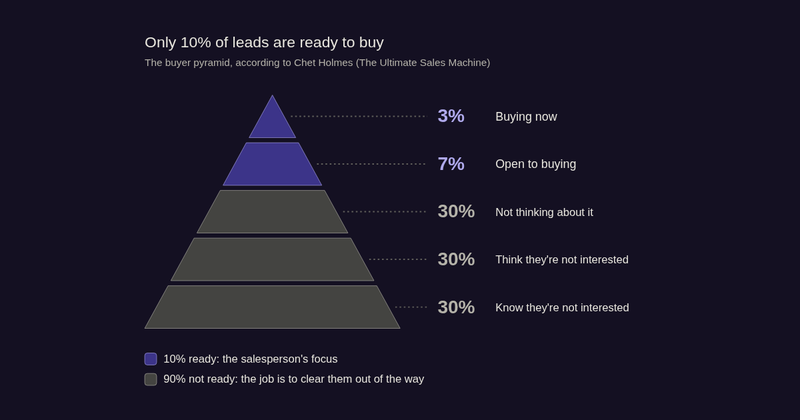
5 AI prompts to sell on WhatsApp without mistaking persistence for opportunity
Copy five AI prompts to open conversations, qualify leads and follow up on WhatsApp with context, clarity and respect for the customer's decision.
WhatsApp free window may extend up to 7 days for click-to-message ads: what changes on September 28
What changes on September 28 for click-to-WhatsApp ad conversations, how the window opens, and what to prepare before the switch.